
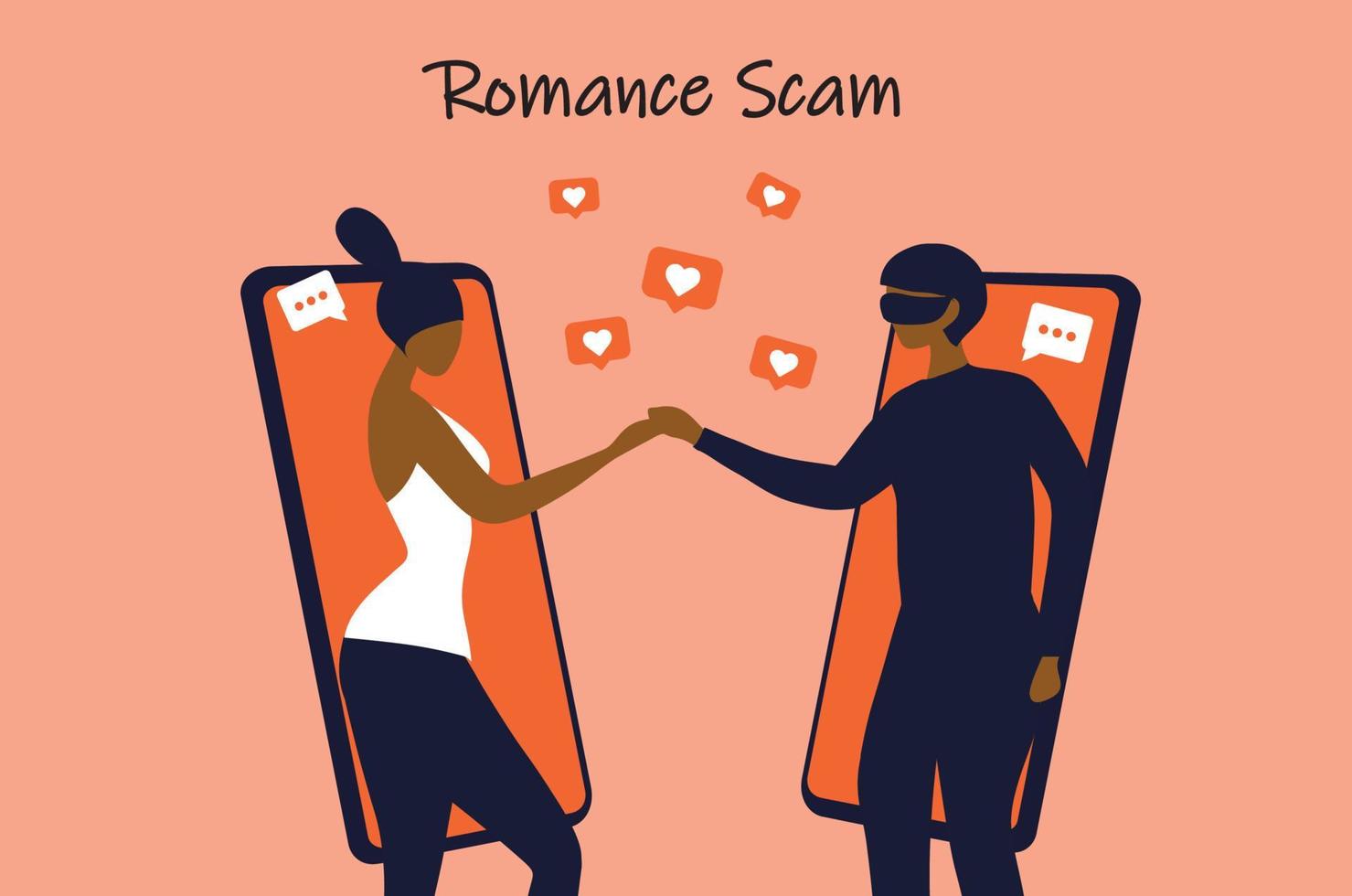
Romance scams are unusual among financial frauds because the crime is not the request for money — that comes late, sometimes very late. The crime is the relationship itself, built deliberately and patiently for the sole purpose of making the eventual request feel unrefusable.
Victims of romance scams are frequently intelligent, financially literate people who would recognize an obvious scam instantly. What makes this fraud different is that it does not attack your judgment about money. It attacks your judgment about a person you have come to trust, sometimes over many months, through what feels like a genuine emotional connection.
How the Relationship Is Built
Contact usually begins on a dating app, Instagram, Facebook, or occasionally through an unexpected direct message claiming a mutual connection. The profile typically uses attractive photos taken from someone else entirely — a model, an actor, or a real person with no idea their images are being used this way.
Early conversation is warm, attentive, and consistent. Scammers running these operations often manage several targets at once and follow scripts refined over many previous attempts, which means the conversation can feel remarkably natural and responsive. They mirror your interests, remember details you've shared, and message consistently enough to build a real sense of routine and closeness.
A common pattern involves the person claiming to live or work somewhere that makes an in-person meeting difficult to arrange soon — often citing an international job, a construction or oil rig contract, a medical mission, or military deployment. This distance is not incidental. It is what makes video calls rare, meetings impossible, and eventually, money transfers the only way the relationship can "help."
When the Money Request Arrives
The first request is rarely large. It might be framed as a minor emergency — a phone bill, a small medical cost, a travel expense to finally visit. Because trust has already been established over weeks or months, and because the amount feels modest relative to the relationship, most people send it without much hesitation.
This first payment is a test. If it succeeds, the requests escalate — a customs fee to release a package supposedly sent to you, a hospital bill, a stuck business payment that needs a "bridge," or a large sum framed as an investment the two of you will benefit from together. Each request is wrapped in a plausible, emotionally resonant story, and each one references the relationship itself as the reason you should help: "I would never ask if it wasn't serious," "I thought you were different," "after everything we've shared."
The Investment Variation
A particularly damaging and increasingly common version merges romance scams with investment fraud. After weeks of relationship-building, the scammer introduces a cryptocurrency or trading "opportunity," often showing screenshots of their own supposed profits and encouraging you to invest through a platform they recommend. Early small withdrawals may even be permitted to build confidence before larger sums are requested and the platform disappears entirely.
Why Video Calls Are Always Avoided or Faked
A consistent refusal or endless postponement of video calls is one of the most reliable signals in a romance scam. Common excuses include a broken camera, an unstable connection in a remote work location, or cultural discomfort with video. Increasingly, scammers use AI-based face-swapping tools to conduct brief, low-quality video calls that appear to match the photos, specifically to overcome growing awareness of this red flag — which means even a video call is no longer absolute proof of authenticity if it is brief, low-resolution, or oddly evasive.
The Behavioral Pattern That Reveals the Scam
Look at the trajectory of the relationship rather than any single message. A relationship that escalates emotionally very quickly — declarations of love within days or weeks — while remaining entirely digital is a strong signal. A partner who has a plausible reason to avoid every opportunity for in-person or verified video contact, indefinitely, is a stronger one. And any request for money, of any size, introduced into a relationship that has never involved meeting in person is the clearest signal of all.
How to Protect Yourself
Reverse image search any profile photo before engaging further — a free tool that takes seconds and frequently reveals the same photos used across other stolen profiles or belonging to an unrelated real person.
Insist on an unscheduled, spontaneous video call early in the relationship, not one arranged days in advance. Scammers using stand-in actors or manipulated footage struggle far more with unscheduled requests.
Never send money, gift cards, or cryptocurrency to anyone you have not met in person, regardless of how long you have been talking or how genuine the relationship feels. This rule holds even after months of contact — length of relationship is not evidence of legitimacy in a digital-only connection.
Talk to a trusted friend or family member about the relationship, particularly once money is mentioned. Romance scam victims are frequently encouraged, subtly, to keep the relationship private — isolation makes the eventual request easier to make and harder for others to interrupt.
What to Do If You've Already Sent Money
Stop all further payments immediately, regardless of what story is used to request more. Contact your bank about reversing or flagging the transaction if it was recent. Report the profile to the platform it originated on and file a report with the Nigeria Police Force or EFCC — these reports, even when recovery is unlikely, help build the case against repeat operations. And be gentle with yourself: this is a sophisticated, deliberately engineered manipulation, not a personal failure of judgment.
Conclusion
Romance scams succeed because they invert the usual order of financial fraud — trust is built first, deliberately and patiently, and the request for money comes only once that trust feels unbreakable. Recognizing the pattern early, before the emotional investment deepens, is the only reliable protection. No one who genuinely cares about you will make their care conditional on money you send to someone you have never met.